

More articles
Higgs TTS 3: beyond reading, toward real speech for voice AI
Higgs TTS 3 is built for voice chat: it speaks, not just reads. It turns model responses into expressive conversational speech across 100+ languages, with zero-shot voice cloning and inline control over emotion, style, prosody, pauses, and sound effects.
Voice AI needs a different kind of text-to-speech. In a live conversation, speech is not just the last step after text generation. It is how the agent answers, reacts, pauses, emphasizes, and carries the turn.
Higgs TTS 3 is built for that setting: beyond reading, toward real speech for voice AI. It keeps the reliability of a production TTS system, but it is designed to speak model responses in the moment, with the timing and expression that make an agent feel conversational.
The model is directly controllable from the text stream. Inline tags can change emotion, style, speed, pitch, pauses, and sound effects mid-utterance, so developers can shape how a response is spoken without leaving the generation flow.
Out of the box, Higgs TTS 3 reaches single-digit WER/CER on 100+ languages. Across Seed-TTS, CV3, MiniMax-Multilingual, and Higgs-Multilingual, it sets the lowest WER against Higgs TTS 2 and a broad comparison set of open and commercial systems.
Multilingual Benchmarks
We evaluate Higgs TTS 3 on public multilingual TTS suites and our internal 111-language Higgs-Multilingual set, covering both common and lower-resource languages.
The table reports macro-averaged WER/CER (↓, x100). Lower is better; highlighted cells mark the best result per row. Non-Higgs bests are selected from Fish Audio S2 Pro, Qwen3-TTS-1.7B, VibeVoice-7B, IndexTTS-2, MiMo-Audio-7B-Instruct, MOSS-TTS-v1.5, OmniVoice, ChatterBox, and FireRedTTS-2.
| Benchmark | # langs | Higgs TTS 2 | Higgs TTS 3 | Non-Higgs Best Model |
|---|---|---|---|---|
| SeedTTS | 2 | 2.10 | 1.11 | 1.21 (OmniVoice) |
| CV3 | 13 | 21.19 | 4.41 | 4.60 (Fish Audio S2 Pro) |
| MiniMax-Multilingual | 32 | 49.86 | 2.74 | 2.98 (OmniVoice) |
| Higgs-Multilingual | 111 | 52.24 | 3.61 | 3.63 (OmniVoice) |
Higgs TTS 3's results have been reproduced by SGLang-Omni team.
Conversational Behavior Benchmarks
Emergent TTS evaluates conversational behaviors that are hard to capture with transcript accuracy alone, including emotion, foreign words, paralinguistic cues, complex pronunciation, questions, and syntactic complexity.
Win-rate (↑) per category, measured as judge preference versus the baseline row. For a fair comparison, every model shares the same reference audio per prompt, and we run the benchmark text verbatim with no inline control tags inserted.
| Category | Higgs TTS 3 | Fish Audio S2 Pro | Qwen3-TTS-1.7B | IndexTTS-2 | MOSS-TTS-v1.5 | OmniVoice |
|---|---|---|---|---|---|---|
| Overall ↑ | 53.65% | 43.80% | 38.84% | 31.12% | 43.89% | 40.82% |
| Emotions ↑ | 53.75% | 53.04% | 45.54% | 39.29% | 60.54% | 61.07% |
| Foreign Words ↑ | 48.75% | 33.93% | 24.64% | 5.36% | 35.18% | 28.75% |
| Paraling- uistics ↑ | 68.57% | 53.75% | 44.29% | 42.50% | 51.43% | 52.68% |
| Complex Pronunciation ↑ | 25.10% | 18.16% | 30.00% | 12.45% | 11.63% | 13.67% |
| Questions ↑ | 61.43% | 55.00% | 53.39% | 45.89% | 53.21% | 45.00% |
| Syntactic Complexity ↑ | 60.71% | 45.71% | 34.11% | 38.93% | 47.32% | 40.36% |
Try It
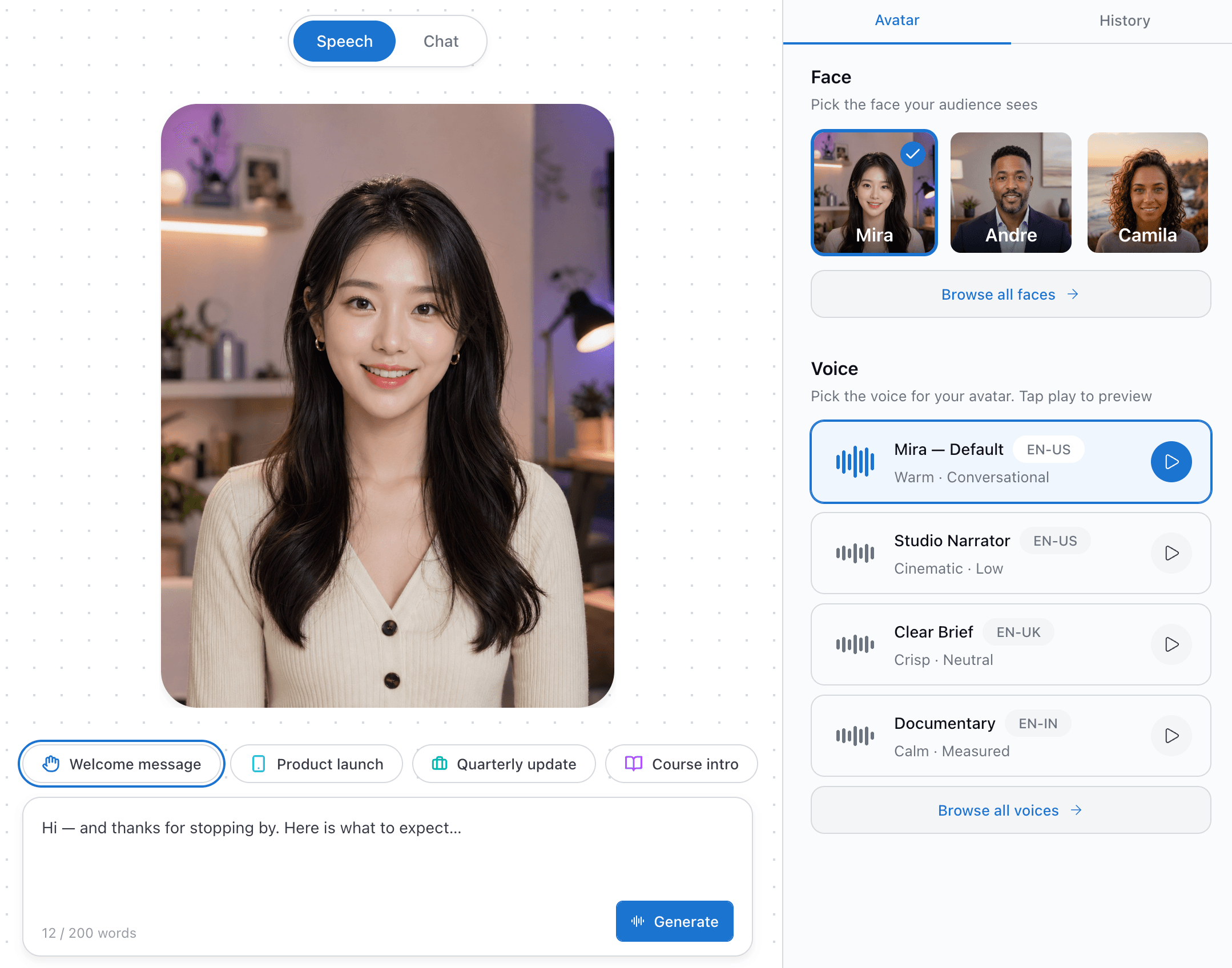
The fastest way to hear Higgs TTS 3 is in Boson Workspace. Choose a voice, enter a response, and experiment with emotion, prosody, pauses, and style tags directly in the browser.
When you are ready to build, use the Boson API. The endpoint supports blocking and streaming generation, voice cloning from audio references, and the same inline controls used in the workspace.
For local inference, the model weights are available on Hugging Face. You can serve them with SGLang-Omni using the Higgs TTS cookbook.
Acknowledgments
Contributors: Silin Meng, Ke Bai, Ruskin Raj Manku, Huapeng Zhou, Jonah Mackey, Dongming Shen, Erik Li, Weisu Yin, Yizhi Liu, Xinyu Wang, Alex Chen, Jaewon Lee, Lindsey Allen, Mu Li
Special thanks to the broader Boson team for supporting training and evaluation, SGLang-Omni team for optimizing inference, and MKTech for development support.