A Weekend of Audio Innovation
From October 24th through October 26th, 2025, Boson AI hosted its first large-scale Higgs Audio Hackathon in partnership with the Master of Science in Applied Computing (MScAC) program at the University of Toronto. With the recent release of our open-sourced Higgs TTS 2 text-to-speech (TTS) and automatic speech recognition (ASR) models, we opened the doors to over 200 innovators and developers, eager to explore, build, and most importantly, break our models.
With thousands of dollars in prizes and merchandise on the line, the participants exceeded our expectations. Boson AI is proud to call this round a raging success, yielding over 50 high-quality project submissions.
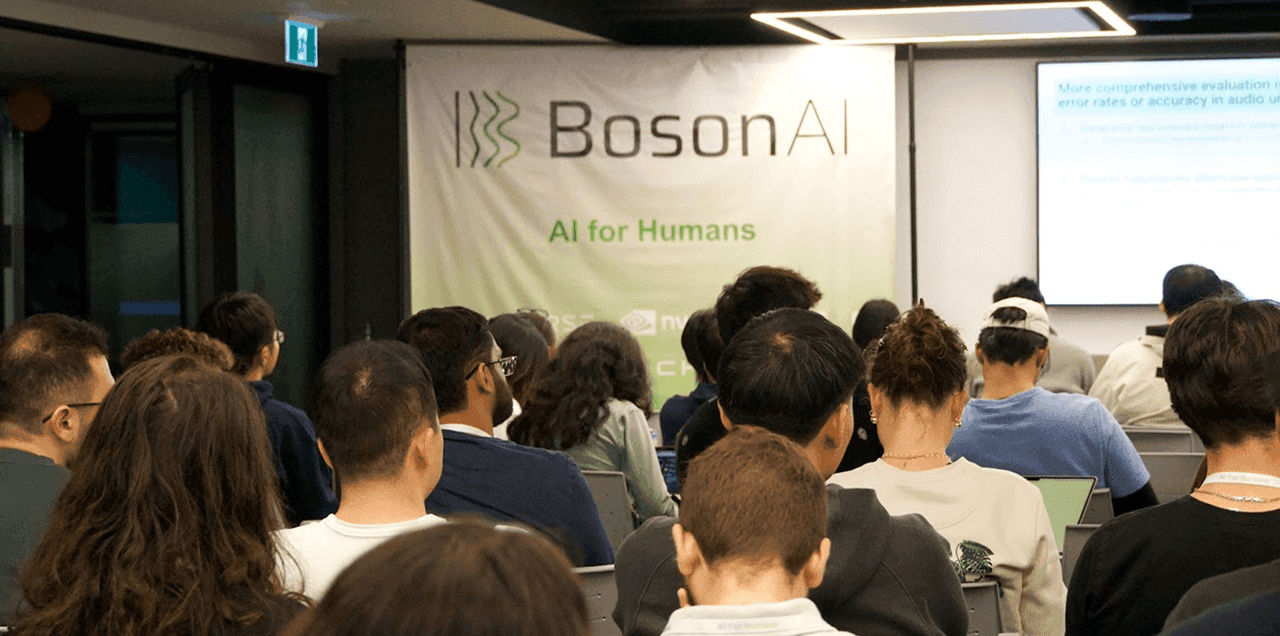
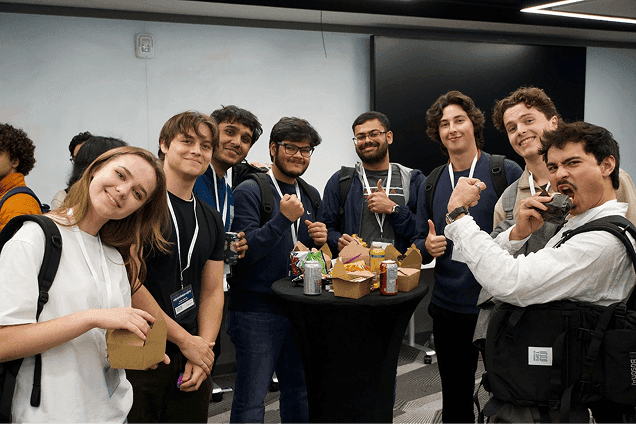
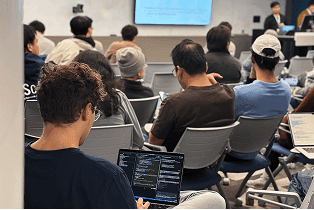
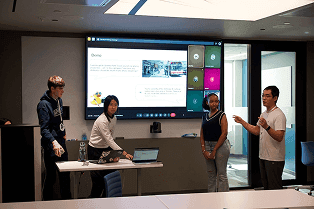
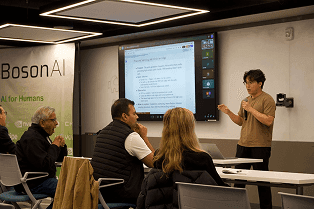
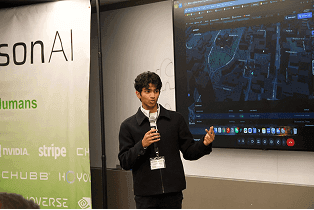
The scene during the opening ceremonies with the iconic Boson AI banner piercing the background while the participants hear from some of the Boson AI team.
Why host a hackathon?
While in-house stress-testing helps us understand our models’ capabilities, giving full access to a group of hungry, creative participants actively fighting to break them creates an environment that is rarely replicated internally. Boson AI organized this event with several strategic goals in mind:
- Model stress-testing: Participants explored use cases and edge cases we hadn't even considered previously.
- Infrastructure validation: Distributing unique API keys from our in-house data center tested our model serving capabilities at (a larger) scale.
- Talent discovery: We made it clear from the opening ceremonies that we're actively looking for driven individuals to join our team. Through walk-in-style interviews throughout the event we gain direct access to an exceedingly diverse and talented pool of candidates. Several of them will be joining our team in the coming months.
Hackathons encourage participants to truly spread their wings. At the heart of every Hackathon is community. We believe that collaboration is key to driving meaningful progress in our industry, and hosting hackathons allows us to bring that spirit to life. Hackathons are more than a coding sprint. For us, they are an opportunity to connect with talented builders, showcase the capabilities of our open-source models, and gather real-world feedback that helps us improve.
The Hackathon Experience
“I loved the criteria and the openness for participants to explore. It was exciting that our project aligned with Boson AI and the judges’ interests. [Our] idea was sparked by the remarkable sonic expressiveness we observed in Boson’s model.” – Anonymous Hackathon participant
Friday Evening: The Launchpad
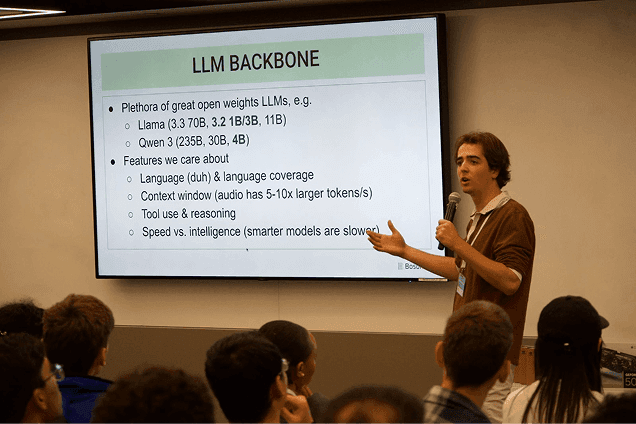
(Left) Several participants rocking their new Boson AI backpacks while enjoying their complimentary dinner during opening night. (Right) Murdock providing opening remarks on Boson AI’s suite of audio models
The weekend kicked off at 6 PM with participants trickling in, grabbing food, and forming teams. By 7 PM, the energy in the room was palpable. Murdock, a Boson, opened with welcoming remarks, setting the tone for the event. CEO Alex Smola and CPO Lindsey Allen would shortly follow, sharing Boson's long-term vision and direction.
Opening night was the opportunity to set the tone for the event. We shared information about our open-source audio model - Higgs TTS 2, and how builders can use this model to build their demos. We also shared some ideas that would be ideal user-case scenarios to inspire our builders to think about their own projects for the Hackathon.
Saturday: Heads down; Code.
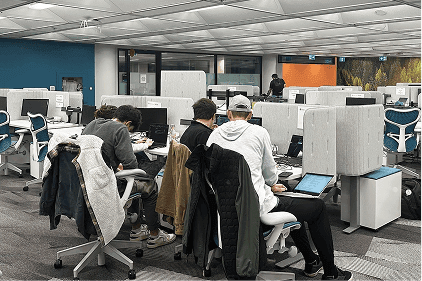
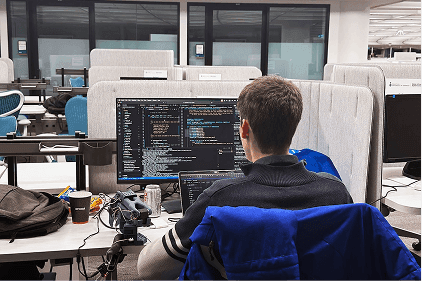
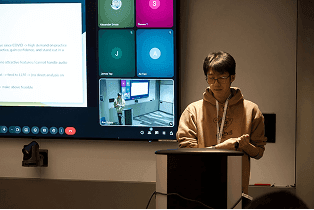
(Left to Right) Wentao giving a talk on his work experience with Boson AI. Images of builders/hackers at work on Saturday, from morning to night, building demos using our open-source Higgs TTS 2.
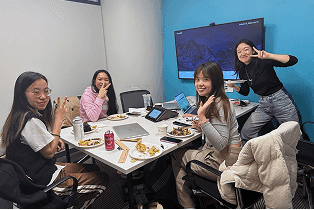
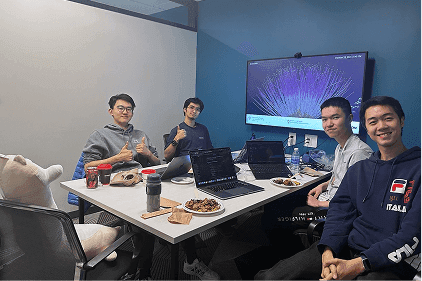
Fueled by shawarma and caffeine, Saturday was all about building. With the MScAC office space packed more than any previous Saturday, teams worked for hours on end to design and construct the backbone of their projects. We had different rooms with different discussions, groups gathering in various spots of the MScAC floors, and even demos being tested well into the evening.
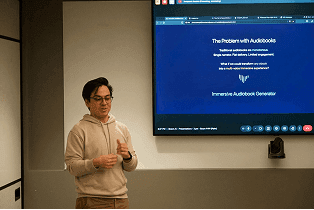
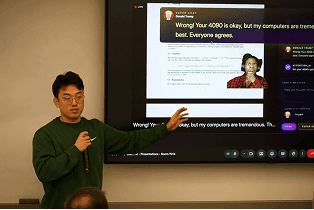
We also hosted a round of technical presentations that evening by several Bosons (Geeyang, Yuzhi, Jonathan and Wentao), talking about their experience with the Higgs TTS 2 model, working with Boson AI, and the general industry direction that audio AI is headed toward. This was followed by an engaging Q&A session, making this Saturday one to remember for everyone who attended.
Sunday: Showtime
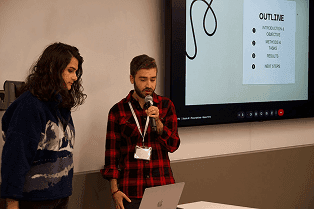
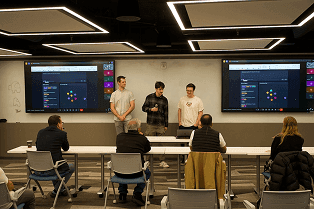
Several participants presenting their project demos to the judges
As caffeine turned into code, the final day brought intensity and a sense of excitement. Putting the final touches on their submissions, teams had until 11 AM to submit preliminary demos for screening. By 2 PM, we notified the 16 finalist teams selected for presentations.
From 3-5 PM, the main lecture hall is split into two, with parallel presentations showcasing an incredible range of applications. Each team had 10 minutes to present, followed by a 5-minute Q&A session. At 5 PM, the rooms reconvened for the top three teams to present to everyone.
We had judges with a range of experience and understanding of the AI industry: Vardan Papyan, Professor @ UofT, Math+CS; Daniel Giovannini, MScAC Partnerships Team; Arvind Gupta, MScAC Academic Director; Matt Medland, BlueCat; Arvind Manickavasagar, Google, MScAC Alumni; Nicole Gagnon, Etsy, MScAC Alumni; Yi Zhu, Co-Founder, Boson AI; and Lindsey Allen, CPO, Boson AI, and Alex Smola, CEO, Boson AI, who joined us virtually.While our judges deliberated, the rest of the crowd headed to The Smith Social House for pub night and the awards ceremony.

A series of photos from our pub night hosted by The Smith Social House.
Winners and Notable Projects
While the judges awarded several top and consolidation prizes, we believe that a few submissions deserve particular attention.
EchoCharlie
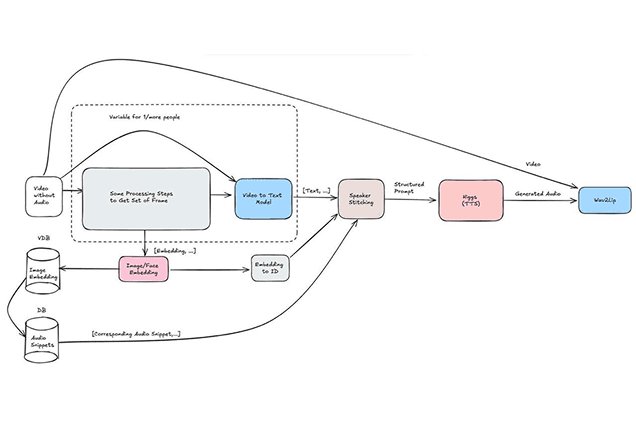
Built by MScAC alumni Itay Kozlov, Pooja Ravi, and Vishnou Vinayagame, Echo Charlie is nothing short of remarkable. Inspired by silent film legend Charlie Chaplin, this multimodal voice conversion pipeline transforms muted videos into fully voiced clips. The system uses audio-visual speech recognition, retrieves reference audio from an indexed library, cleans up lip-reading transcripts, and generates speech matching the target speaker.
This impressive audio-visual speech application earned the top spot and blew our esteemed panel of judges away. Congratulations to the EchoCharlie team on their excellent work!
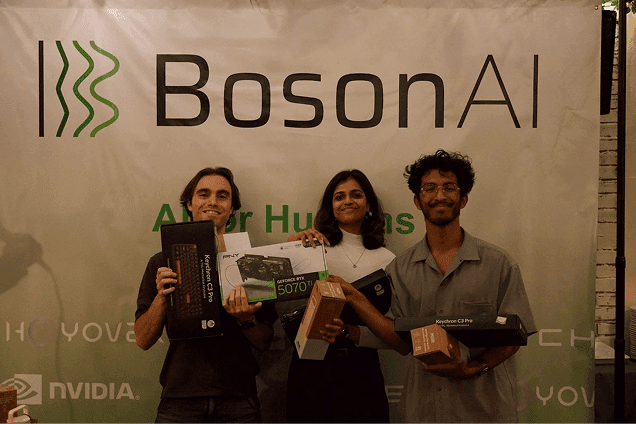
(Left) A flow diagram describing the architecture of EchoCharlie. (Right) A photo of the team members ([left to right] Itay, Pooja and Vishnou) on stage at The Smith Social House accepting their prizes.
Cypress
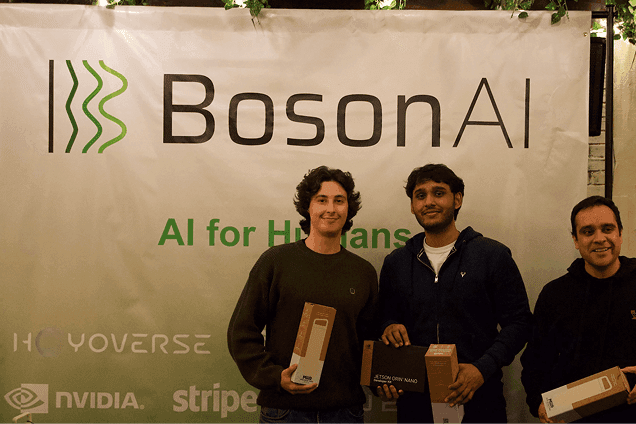
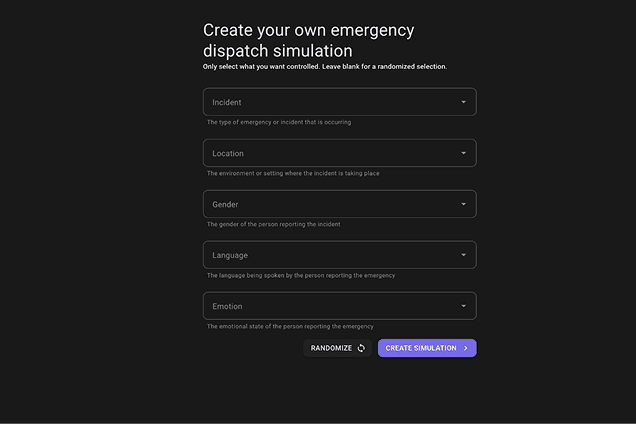
(Left) The Cypress team valiantly accepting their prizes on stage at the pub night. (Right) The user interface of the Cypress implementation.
Team Cypress (Rishi Dinesh, Adam Cormier, Nic Bolton, and Shiv Gupta) created a web-based training platform that simulates realistic 911 emergency calls. Trainees engage in live, two-way voice conversations with an AI caller that dynamically adjusts emotion, urgency, and tone based on the scenario. Post-session, the system provides full transcription with audio playback and detailed performance reviews.
The beauty of this project lies in its vast applicability, not just for emergency dispatch training, but for any audio-based professional training: customer service, sales calls, crisis hotlines, and beyond. The team masterfully showcased both our TTS and ASR capabilities while solving a real-world problem. For their efforts, the Cypress team was awarded Best Use of Audio Generation.
Honourable Mentions
With 50+ submissions, we saw incredible creativity across the board:
- Scarlett:A voice-controlled database agent that introspects, analyzes, and creates voiced presentations from your data; essentially automating a consultant's entire workflow. GitHub and Demo
- Need for Speech: An F1 AI commentator that clones David Croft's voice and provides real-time race commentary by integrating telemetry data with contextual knowledge. GitHub
- HiggsArt: Voice-controlled image editing that replaces traditional GUIs, pointing toward a future of vibe-coding with voice. GitHub and Demo
- Manus Victoriosa: Transforms ebooks into cinematic audiobook experiences with character-specific voices and sound effects for under $50 per chapter.GitHub and Demo
What We Learned
The Higgs Audio Hackathon provided us with insights about our model that will guide us into the future.
- Voice cloning:Projects like Echo Charlie and Need for Speech showed that our timbre matching capabilities are production-ready.
- Emotion control: The Cypress emergency simulator demonstrated how emotion modulation in TTS can create genuinely compelling experiences.
- Voice-first UIs: HiggsArt and Scarlett proved that voice can replace traditional interfaces for complex workflows.
- Real-time performance: Several projects pushed our model serving infrastructure, revealing optimization opportunities.
Join Us
This event reminded us both of the importance of building a community around our models and reinforced the reliance of progress on the open-source community.
The Toronto Higgs Audio Hackathon was just the beginning. As we continue to push the frontier of open-source audio AI, we’re excited to bring this energy to more cities, more builders, and more groundbreaking ideas.
Want to explore what's possible with Higgs TTS 2?
Interested in joining the next hackathon?
Sign up
here to be notified when registration opens.
Want to work on this technology full-time?
To the 200+ participants who spent their weekend pushing the boundaries of audio AI: thank you. You exceeded our expectations, and we are happy to call you part of the Boson AI family. See you all next year for Toronto Round 2!
Special thanks to the MScAC program at the University of Toronto, our judges, and everyone at Boson AI who made this event possible.